Gallatin County, IL | Post-Frame Construction & Metal Buildings
Around Gallatin County
A building in Gallatin County should make sense for the work happening around it. Agriculture and tourism both shape the county, with productive farmland, early Illinois history, and community gatherings giving property owners different reasons to put up a building.
Agriculture became the leading industry after salt production ended in 1873. More than half of the county’s 324 square miles has rich, productive soils. For someone planning a farm building, that makes room for machinery and a practical place to work more than an afterthought.
The Great Salt Springs, southeast of Equality, tell the earlier part of that story. This is where saltworks first developed into a large industry in the area. Gallatin County’s working landscape has a history that reaches beyond farming.
At Half Moon Lick, the detail to picture is its shape: a horseshoe about 300 feet across at its widest point. It is a distinctive piece of local history, not just another name on a list of places to visit.
Old Shawneetown carries the county’s banking history. Illinois’ first bank was originally in the John Marshall House. The house has been rebuilt and now serves as the Gallatin County Historical Society’s museum, giving visitors a place to connect that early banking story with the county today.
Inside the Gallatin County Courthouse in Shawneetown, a historical mural painted in 1941 offers another way to spend time with the county’s past. The history here is not confined to separate museum buildings.
September brings the annual Popcorn Days celebration. Ridgway Popcorn Days includes beauty pageants, a toy tractor sledge pull, carnival rides, fair food, and live music. The big parade takes place Saturday at 1 p.m. That mix of activities helps explain why space for serving visitors matters alongside space for farm work.
Omaha Furniture adds a different piece of the picture: a local furniture business in a county where agriculture and tourism are important. A commercial building here may need to serve merchandise and deliveries rather than tractors.
Building on Gallatin County Soil
Across Gallatin County, the poorly drained share is 57.5%. Reesville and Patton are the leading soils listed for the county; Reesville is somewhat poorly drained, while Patton is poorly drained. In plain terms, water may linger rather than move away readily. For a post-frame building, that makes the location of the building pad and the handling of water around posts important early planning questions. This countywide picture does not tell an owner exactly what is under a particular property.
Before settling on the building’s position, look at where water collects and where it can go. Discuss grading that directs water away from the building and how a gravel base will fit into the site plan. A gravel surface is worth considering alongside drainage, not instead of it. The goal is to plan the ground and the building together, rather than leave water management until after the building’s location is fixed.
What People Build in Gallatin County
Built-Mor Buildings builds post-frame and metal buildings. In Gallatin County, the most useful starting point is the job a building needs to do.
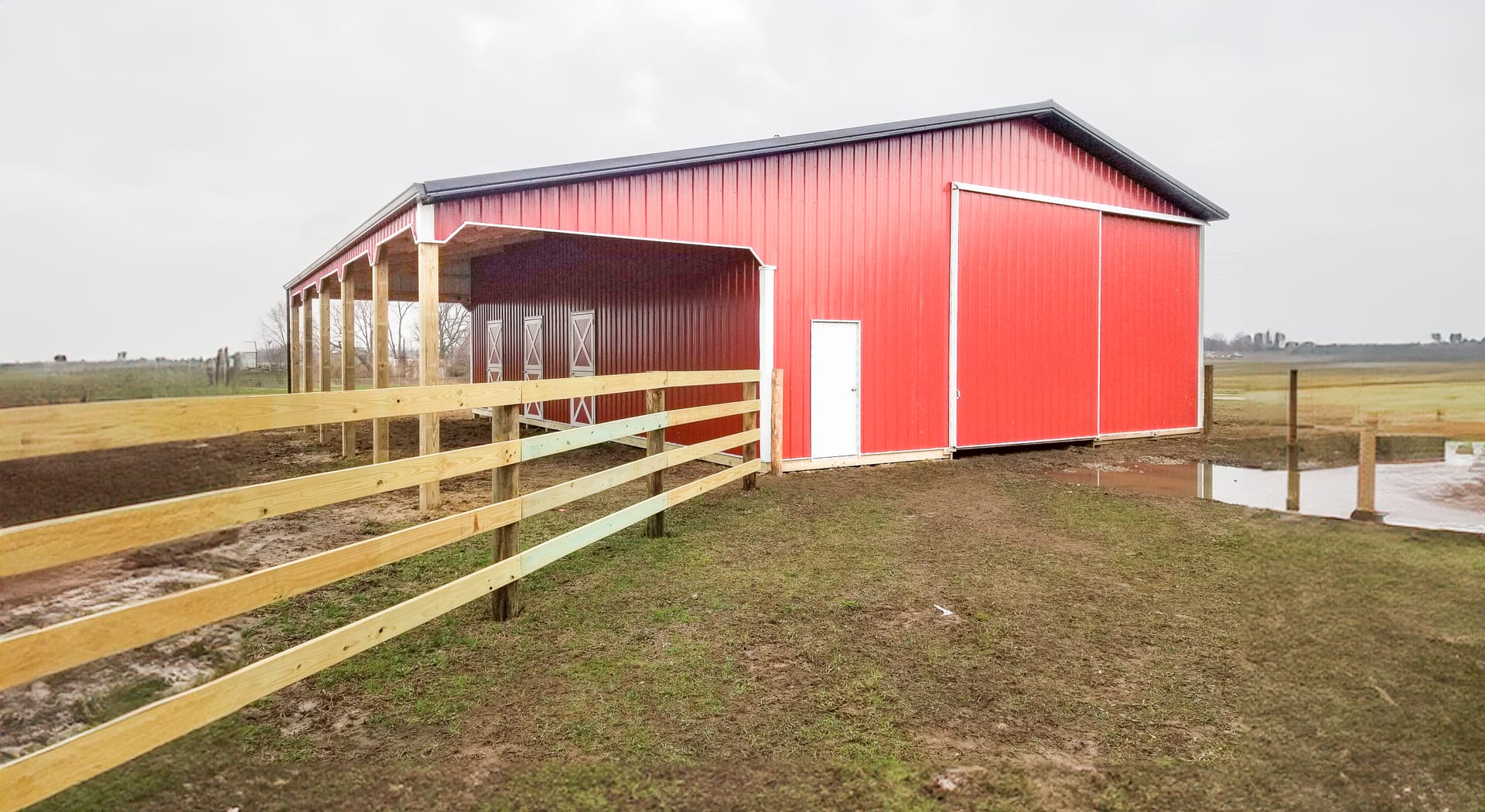
For farm properties, Machine Storage follows directly from the county’s agricultural role. Plan around the equipment that needs shelter, including how it will enter, park, and leave without making every move a shuffle.
An Insulated Workshop is another option tied to agricultural work. If the goal is a dedicated place for equipment upkeep, start the conversation with the work area, tools, and access needed, rather than choosing a footprint first.
Retail & Restaurant space connects with the county’s tourism activity, historical attractions, and Popcorn Days. An owner considering that use should think through customer access and service needs separately from merchandise or supply storage.
Commercial Storage fits the kind of merchandise-handling needs a furniture business such as Omaha Furniture illustrates. That is a reason to discuss storage layout and delivery access, not a suggestion that the business has a building project underway.
These uses give Built-Mor Buildings a practical starting point for a custom building conversation: what goes inside, what happens there, and how the property needs to function.
Towns Served in Gallatin County
Built-Mor Buildings serves property owners planning buildings in Shawneetown, Ridgway, Equality, New Haven, Omaha, Old Shawneetown, and Junction.
Planning a Building in Gallatin County
Bring Built-Mor Buildings a clear description of the building’s purpose and the property you have in mind. A rough sketch of access, existing structures, and places where water collects can make the conversation more useful than a size alone.
For a farm project, describe the equipment and working space needed. For a commercial project, explain how customers, deliveries, and stored goods will move through the property. If access depends on U.S. Highway 45 or the county’s Illinois routes, include that in the discussion.
One reviewer wrote: "Great people. I'm a truck driver go here often. And always nice" (Steven S., Google review).
Start with the daily use and the ground beneath it. Those are the details that can help shape a Built-Mor Buildings plan around a Gallatin County property, rather than ask the property owner to work around the building.
Post-Frame Construction in Southern Illinois
What soil conditions in Southern Illinois affect pole barn construction?▼
Southern Illinois has variable soil conditions ranging from clay-heavy bottomland near rivers to well-drained loess soils on uplands. Clay soils require deeper post embedment or concrete piers to prevent frost heave. BuiltMor evaluates your site and engineers the foundation appropriately — posts are typically set 4 to 6 feet deep depending on soil type and building size.
What snow load requirements apply to pole barns in Southern Illinois?▼
Southern Illinois is in a 20-25 pound per square foot ground snow load zone under Illinois building codes. BuiltMor engineers all structures to meet or exceed local snow load requirements. Roof pitch, truss spacing, and lumber grades are specified based on your county's requirements and the intended use of the building.
Do I need a permit for a pole barn in Southern Illinois?▼
Most Southern Illinois counties require building permits for pole barns and post-frame structures. Requirements vary by county — some have size thresholds, others require permits for any permanent structure. BuiltMor handles permit applications and inspections as part of your project. We know the requirements in each county we serve.
How do Southern Illinois weather conditions affect post-frame buildings?▼
Southern Illinois experiences hot, humid summers and cold winters with occasional ice storms. Post-frame buildings handle these conditions well when properly engineered. BuiltMor specifies pressure-treated posts rated for ground contact, appropriate ventilation for humidity control, and steel roofing and siding that withstand temperature swings and severe weather.
What areas does BuiltMor serve in Southern Illinois?▼
BuiltMor Buildings serves all of Southern Illinois, from the Metro East (St. Clair, Madison counties) south to Massac and Pulaski counties, and east to the Indiana border. We are a local contractor based in Southern Illinois — not a national kit company. We build complete structures on your site.