Pope County, Illinois | Post-Frame Construction & Metal Buildings
Around Pope County
Pope County properties are shaped by wooded recreation areas, historic sites, rural roads, and year-round outdoor activity. Built-Mor Buildings constructs pole barns, barndominiums, and custom metal buildings for residential, recreational, and commercial uses throughout the county.
The right building starts with the property itself. How water leaves the site, where vehicles enter, and how the building will be used all matter before construction begins.
Dixon Springs State Park shows just how distinctive the county’s landscape can be. The park sits on a giant block of sandstone deposited 315 million years ago and dropped 500 feet along a fault line running northwest across Pope County. That geology created the park’s canyons, waterfalls, and rocky scenery.
At Rim Rock Pounds Hollow Recreation Area, a 7/8-mile trail follows the top edge of the “Pounds,” a circular 40-acre area enclosed by steep sandstone bluffs. Wooden stairs lead down between rock slabs into the hollow. It is the sort of terrain that makes access and building placement worth considering carefully on rural property.
Lake Glendale Recreation Area offers camping, swimming, boating, fishing, hiking, and bicycling among tall pines and mixed hardwood forest. That mix of activities gives local property owners practical reasons to consider secure space for boats, campers, bicycles, tools, and outdoor equipment.
Millstone Lake lies in rural Pope County near Simpson and covers about .2-square miles. The River to River Trail passes along the lake, which is open all year to hikers and horseback riders. Nearby Trail 049 leads toward the Jackson Falls canyon area. Horse traffic and trail access make stables and protected equipment storage especially relevant in this part of the county.
The Alexander Buel House, constructed in 1840, is a state historic site with ties to the Trail of Tears. The Buel House marks the beginning of the Trail of Tears in Illinois, described as the most fatal stretch of the route. Pope County’s history is also kept locally at the Pope County Historical Society Museum at 112 N Columbus Ave in Golconda.
Outdoor travel supports more than recreation. Tourism draws visitors to the Shawnee National Forest and the Ohio River, while healthcare, retail, and education also contribute to the county’s economy. Illinois Route 34, Illinois Route 145, Illinois Route 146, and Illinois Route 147 connect properties and communities across the area, making road access an important part of planning commercial or storage space.
Building on Pope County Soil
Grantsburg is the most common soil named for Pope County, followed by Wellston. Grantsburg is generally moderately well drained, while Wellston is well drained. Across the county, 11.4 percent of the land is poorly drained. That does not determine what can be built on a particular parcel, but it does make site evaluation important.
For a post-frame building, drainage affects whether water collects around posts, doors, and approaches. A location that stays wet may need more attention to grading, a gravel base, and the direction runoff takes after leaving the roof. Placing the building where water can move away, rather than settle around the structure, helps keep entrances usable and the interior dry. These decisions should be based on conditions at the actual building site rather than on a countywide soil name alone.
What People Build in Pope County
Pope County offers lakes, campgrounds, trails, and hunting areas for outdoor recreation. An enclosed post-frame or metal building can keep a camper, boat, bicycles, and seasonal equipment together between trips to Lake Glendale or other outdoor destinations.
Stables also fit the county’s horseback-riding activity. The River to River Trail passes along a lake that is open all year to hikers and horseback riders.
Retail & Restaurant buildings connect with Pope County’s retail economy and tourism. Visitors come for the Shawnee National Forest, the Ohio River, and recreation areas, while Illinois Routes provide connections through the county. A custom building can be planned around customer space, storage, and day-to-day operations.
Office or Warehouse buildings suit transportation and other businesses that need room near the county’s state-route network. Built-Mor Buildings can plan metal space around office functions, inventory, equipment, and vehicle access rather than forcing different uses into an off-the-shelf layout.
Recreational Buildings are another practical match for a county known for hiking, fishing, hunting, boating, horseback riding, and camping. Such a building can provide organized space for outdoor gear, maintenance work, or gatherings after a day on the trail.
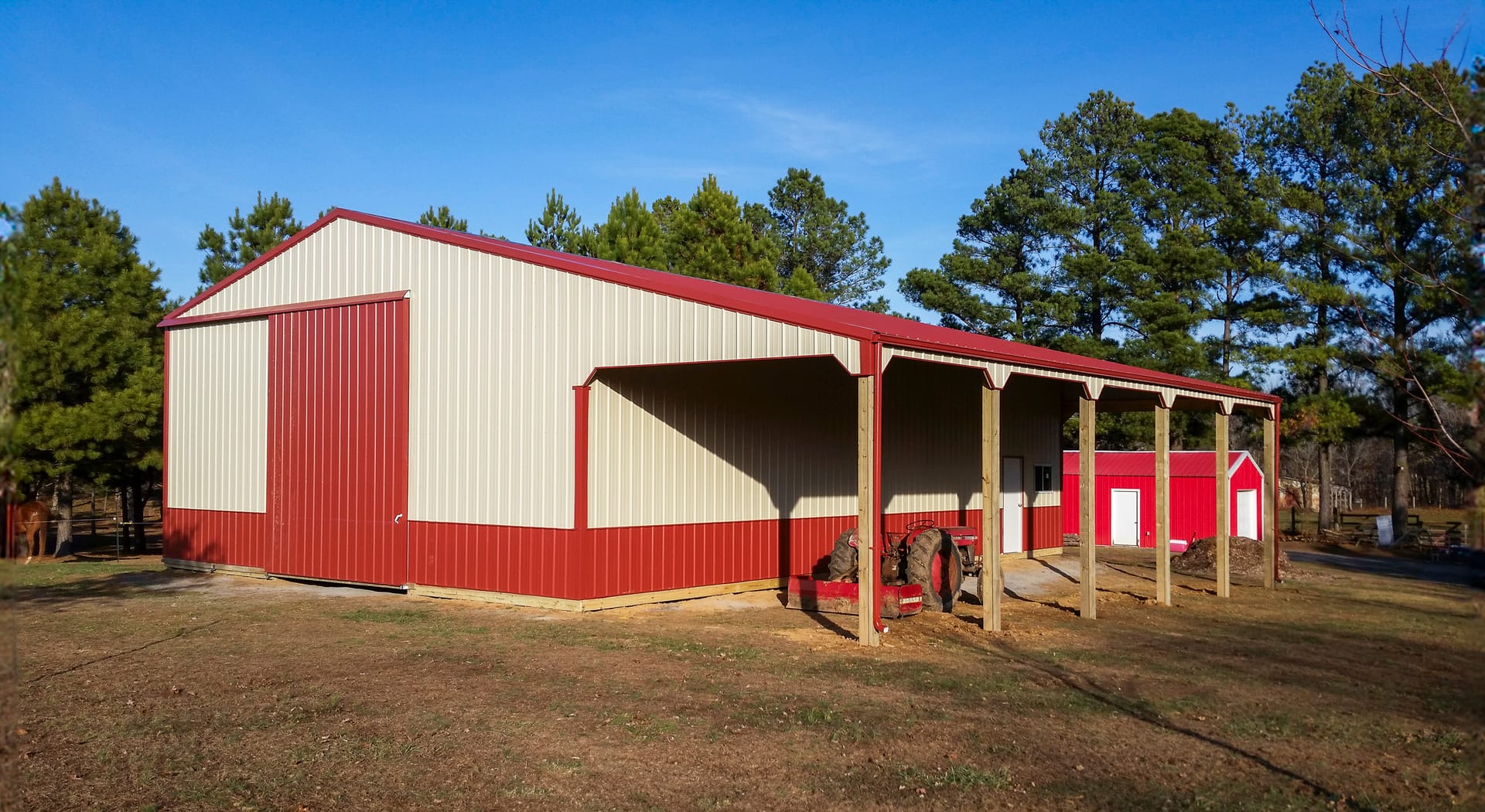
Built-Mor Barndominiums offer another option for rural property owners who want living space and useful storage within one building concept. The layout can reflect how the owner uses the land, whether that means room for vehicles, hobbies, equipment, or everyday residential needs.
“Great workmanship. Great prices if you have any questions the secretary is very helpful as well.” (Yellow Pages reviewer, Yellow Pages review)
Towns Served in Pope County
Built-Mor Buildings serves property owners in Golconda and Eddyville.
Golconda is the county seat and was established as a settlement in 1798. Whether the site is near town, along a state route, or on rural acreage, planning should begin with access, drainage, intended use, and enough room for vehicles to approach the building comfortably.
Planning a Building in Pope County
A good Pope County building plan starts with a few straightforward questions. What must fit inside? Will the building hold a camper, horses, business inventory, work equipment, or living space? How will vehicles reach the doors? Where does rainwater go now, and where should it go after the roof is in place?
Built-Mor Buildings fits the structure to those practical needs with post-frame and metal-building options. On wooded or uneven rural sites, building position and approach matter. Near outdoor destinations, secure equipment space may take priority. Along the county’s transportation routes, door placement and vehicle circulation may guide the layout.
From a storage building for lake and trail equipment to a barndominium or custom commercial structure, the goal is a building suited to the property and the way its owner actually plans to use it.
Post-Frame Construction in Southern Illinois
What soil conditions in Southern Illinois affect pole barn construction?▼
Southern Illinois has variable soil conditions ranging from clay-heavy bottomland near rivers to well-drained loess soils on uplands. Clay soils require deeper post embedment or concrete piers to prevent frost heave. BuiltMor evaluates your site and engineers the foundation appropriately — posts are typically set 4 to 6 feet deep depending on soil type and building size.
What snow load requirements apply to pole barns in Southern Illinois?▼
Southern Illinois is in a 20-25 pound per square foot ground snow load zone under Illinois building codes. BuiltMor engineers all structures to meet or exceed local snow load requirements. Roof pitch, truss spacing, and lumber grades are specified based on your county's requirements and the intended use of the building.
Do I need a permit for a pole barn in Southern Illinois?▼
Most Southern Illinois counties require building permits for pole barns and post-frame structures. Requirements vary by county — some have size thresholds, others require permits for any permanent structure. BuiltMor handles permit applications and inspections as part of your project. We know the requirements in each county we serve.
How do Southern Illinois weather conditions affect post-frame buildings?▼
Southern Illinois experiences hot, humid summers and cold winters with occasional ice storms. Post-frame buildings handle these conditions well when properly engineered. BuiltMor specifies pressure-treated posts rated for ground contact, appropriate ventilation for humidity control, and steel roofing and siding that withstand temperature swings and severe weather.
What areas does BuiltMor serve in Southern Illinois?▼
BuiltMor Buildings serves all of Southern Illinois, from the Metro East (St. Clair, Madison counties) south to Massac and Pulaski counties, and east to the Indiana border. We are a local contractor based in Southern Illinois — not a national kit company. We build complete structures on your site.