Fayette County, IL | Post-Frame Construction & Metal Buildings
Around Fayette County
Fayette County has a character shaped by farm ground, state history, outdoor recreation, and roads that keep people and goods moving. Vandalia sits at the center of much of that activity.
The Vandalia Statehouse is the oldest existing capitol building in Illinois. Vandalia served as the state capital from 1819 to 1839, and the building remains a visible reminder of that chapter in the community’s history. Across the street from the Statehouse in Lincoln Park, Sitting With Lincoln is a life-sized, seated bronze statue.
On the Statehouse grounds, the Madonna of the Trail honors the pioneer women who traveled the Cumberland Road. Another roadside sight is the Kaskaskia Dragon, an unexpected fire-breathing dragon along the highway in Vandalia.
Agriculture is part of everyday life here. Corn and soybean farming are prevalent throughout Fayette County, while local farmers’ markets connect that surrounding agricultural production with fresh produce and artisanal goods. The Fayette County Fair celebrates the same agricultural heritage and gives the community a place to gather.
Water and wildlife are also close at hand. The Kaskaskia River State Fish and Wildlife Area offers fishing, boating, and wildlife observation. Vandalia Lake is another local destination for boating and fishing.
When Christmas comes around, Vandalia Old Tyme Christmas brings small-town holiday cheer to the community. These local gatherings, historic places, farms, and recreation areas are part of what makes a Fayette County building project different from a project somewhere else.
Building on Fayette County Soil
Drainage deserves early attention when choosing a building site here. Countywide, 75.1 percent of the land is poorly drained or somewhat poorly drained. Bluford is the largest of the named soils and is somewhat poorly drained, while Cisne is poorly drained. In plain terms, water may move away slowly after rain, leaving soft ground or moisture around posts if the site is not prepared thoughtfully.
For a post-frame building, that makes placement and water control important. Built-Mor Buildings can help owners think through where the building should sit, how the surrounding grade will direct water away, and whether a properly prepared gravel base fits the intended use. Keeping runoff from collecting beside the building helps protect access, reduce mud, and avoid leaving posts in persistently wet surroundings.
What People Build in Fayette County
Machine Storage is a natural fit in a county where corn and soybean farming is prevalent. A purpose-planned building can provide room for tractors, implements, seed handling equipment, and maintenance work while keeping traffic patterns around the farm practical.
Livestock Buildings can serve agricultural properties that need covered space for animals, feed, or daily chores. The layout can be planned around how the property owner actually moves equipment and works the site rather than forcing those routines into a generic floor plan.
RV Storage also makes sense for owners who camp in the state parks or spend time boating and fishing at Vandalia Lake and the Kaskaskia River State Fish and Wildlife Area. Enclosed storage keeps a recreational vehicle, boat, and related gear together at home instead of scattered across the property.
Commercial Storage can support businesses serving Fayette County’s retail, construction, wholesale, and transportation activity. Interstate 57, Interstate 70, U.S. Route 40, and U.S. Route 51 give local operators several important travel routes, making secure space for inventory, materials, vehicles, or equipment useful near an active corridor.
Retail & Restaurant buildings fit a county where retail trade and accommodation and food services both have an established presence. A post-frame or metal building can be configured around customer areas, back-of-house storage, service access, and the needs of the specific operation.
Wedding & Event Venue projects can provide flexible gathering space in a community that already comes together for the Fayette County Fair, an annual festival at the fairgrounds, and Vandalia Old Tyme Christmas. The building plan can account for open gathering areas, storage, entrances, and the way guests arrive and move through the property.
One garage owner described the building process this way: “Guy was a pleasure to work with and the crew who came to build my garage. I love my new garage and can't wait to fill it up.” (A L., Google review)
Towns Served in Fayette County
Built-Mor Buildings serves property owners in Vandalia, St. Elmo, Ramsey, Brownstown, Farina, St. Peter, La Clede, and Bingham.
Planning a Building in Fayette County
A useful plan begins with the property rather than a standard building package. The intended use determines door sizes, interior clearance, traffic flow, insulation needs, storage layout, and the amount of open floor space. A farm machine building has different needs from an event venue, a commercial storage building, or an RV building.
Site conditions matter just as much. Because slow drainage is common across Fayette County, owners should look closely at where water currently travels after rain. The building location, finished grade, driveway approach, and gravel base should work together so water moves away and vehicles can reach the doors without crossing a chronically wet area.
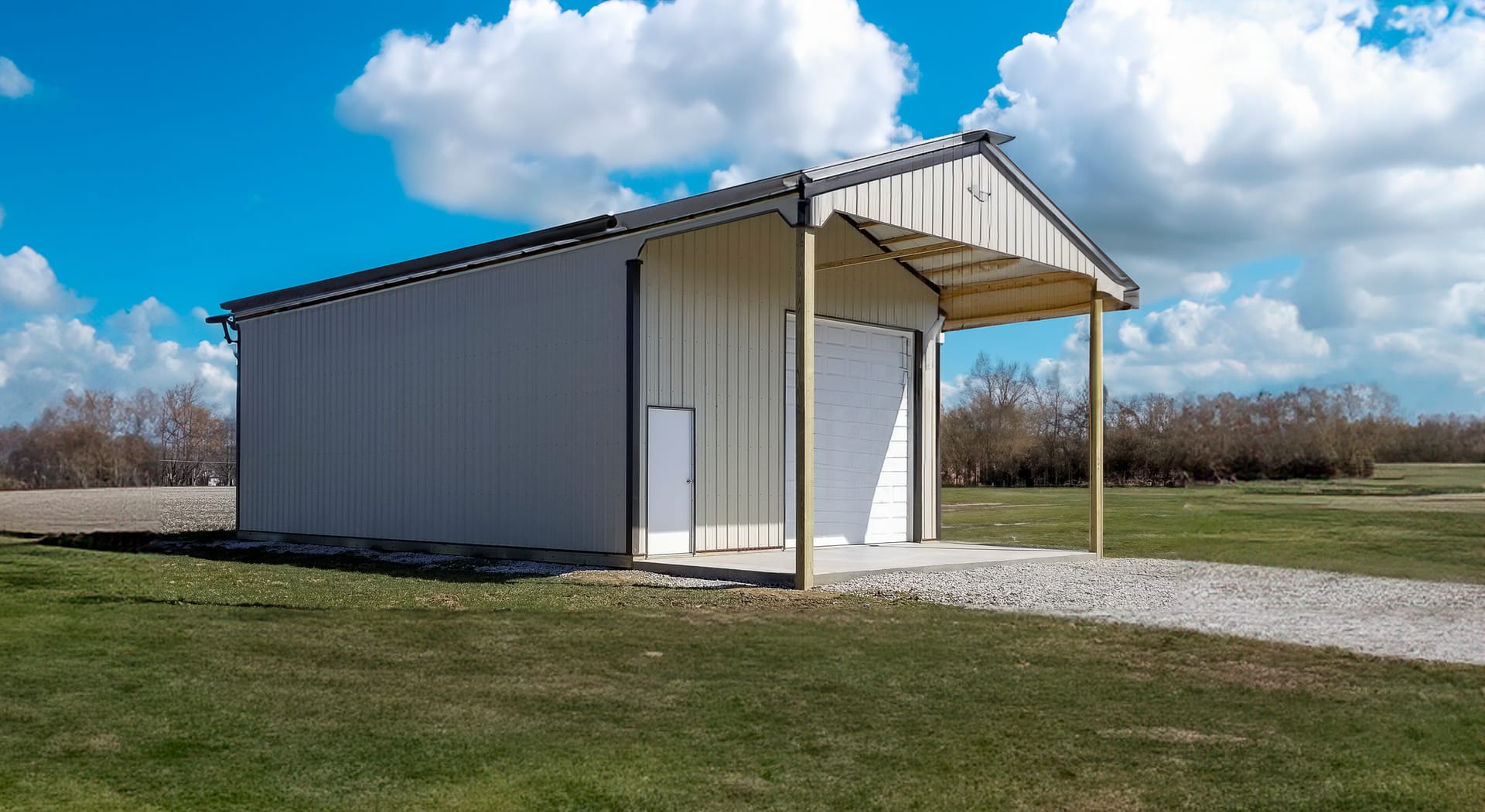
Built-Mor Buildings constructs post-frame and metal buildings for agricultural, commercial, and residential uses. The goal is to match the structure to the owner’s land and day-to-day needs, whether that means sheltering farm machinery, storing recreation equipment near local fishing and boating destinations, or creating commercial space with access to Fayette County’s highway network. A good first conversation should cover the site, the building’s job, access, future storage needs, and how the property owner expects to use the space throughout the year.
Post-Frame Construction in Southern Illinois
What soil conditions in Southern Illinois affect pole barn construction?▼
Southern Illinois has variable soil conditions ranging from clay-heavy bottomland near rivers to well-drained loess soils on uplands. Clay soils require deeper post embedment or concrete piers to prevent frost heave. BuiltMor evaluates your site and engineers the foundation appropriately — posts are typically set 4 to 6 feet deep depending on soil type and building size.
What snow load requirements apply to pole barns in Southern Illinois?▼
Southern Illinois is in a 20-25 pound per square foot ground snow load zone under Illinois building codes. BuiltMor engineers all structures to meet or exceed local snow load requirements. Roof pitch, truss spacing, and lumber grades are specified based on your county's requirements and the intended use of the building.
Do I need a permit for a pole barn in Southern Illinois?▼
Most Southern Illinois counties require building permits for pole barns and post-frame structures. Requirements vary by county — some have size thresholds, others require permits for any permanent structure. BuiltMor handles permit applications and inspections as part of your project. We know the requirements in each county we serve.
How do Southern Illinois weather conditions affect post-frame buildings?▼
Southern Illinois experiences hot, humid summers and cold winters with occasional ice storms. Post-frame buildings handle these conditions well when properly engineered. BuiltMor specifies pressure-treated posts rated for ground contact, appropriate ventilation for humidity control, and steel roofing and siding that withstand temperature swings and severe weather.
What areas does BuiltMor serve in Southern Illinois?▼
BuiltMor Buildings serves all of Southern Illinois, from the Metro East (St. Clair, Madison counties) south to Massac and Pulaski counties, and east to the Indiana border. We are a local contractor based in Southern Illinois — not a national kit company. We build complete structures on your site.