Franklin County, IL | Post-Frame Construction & Metal Buildings
Around Franklin County
Rend Lake is a big part of local recreation. It offers boating, water skiing, camping, nature trails, hiking, biking, golf, picnicking, swimming, fishing and hunting. Its six major recreation areas include campgrounds, beaches, picnic areas and public wildlife areas. For nearby property owners, that active outdoor culture can create a real need for secure storage for boats, campers, fishing gear and other seasonal equipment.
Wayne Fitzgerrell State Recreation Area is also located in Franklin County, adding another outdoor destination to the county’s identity.
Local history runs deep. Coal was being mined in Franklin County as early as 1889 at the King Coal Mine, and the county still recognizes its coal-country heritage. Franklin County was established on January 2, 1818, from parts of Gallatin and White counties.
Jordan’s Fort was built in Cave Township near Thompsonville. The Franklin County Garage Museum preserves a former Ford dealership built in 1910. The building was constructed in 1910 as Franklin County’s first Ford dealership and was later restored and turned into a museum.
Capitol Park on the Square has a historical marker commemorating a notable first visit to the United States. The park’s band shelter has served as the center of dozens of community events, including the Summer Cruise Series and Capitol Country Review.
Community gatherings remain part of county life. The Rend Lake Water Festival included a parade and carnival from May 4 through May 7, 2022. The Rend Lake Car Show on September 10, 2022 brought vehicles from around the surrounding area. Events like these help explain why flexible gathering space, vehicle storage and commercial buildings can all make sense here.
Building on Franklin County Soil
About 67.2 percent of Franklin County land is poorly drained or somewhat poorly drained. Bluford is the most widespread of the listed soils and is somewhat poorly drained, while Ava is moderately well drained.
For a post-frame building site, that drainage share means water deserves attention before posts are placed. A low spot that stays wet can leave water around posts and beneath the building. Site placement, grading and a gravel base should be considered together so water can move away from the structure instead of collecting beside it or passing through the working area.
That does not mean every Franklin County parcel behaves the same way. It means the building should be positioned with the actual site in mind. Looking at where water settles after rain, how vehicles will approach the building and where runoff can go helps create a more usable location for a barn, shop or storage building.
What People Build in Franklin County
Agriculture is an important part of Franklin County, making machine storage a practical choice for tractors, implements and other farm equipment. A post-frame layout can be planned around equipment access and the clear space needed for everyday work.
Rend Lake’s boating, camping and outdoor activity provides a direct reason for RV storage and residential vehicle storage. These buildings can give campers, boats and tow vehicles a dedicated place at home rather than leaving them exposed or crowding a driveway.
Franklin County also has manufacturing activity and access through Interstate 57, along with Illinois Route 14, Illinois Route 34, Illinois Route 37, Illinois Route 148, Illinois Route 149, Illinois Route 154 and Illinois Route 184. Those connections can support an office or warehouse for a business that needs both working space and storage.
Local commerce provides another use. Franklin County has 128 retail establishments and 88 accommodation and food-service establishments, so a retail and restaurant building may fit an owner preparing space for customers, inventory or food service.
The festivals, car show and community programs around the county can also create a place for a wedding and event venue, particularly when the plan calls for a large, adaptable interior.
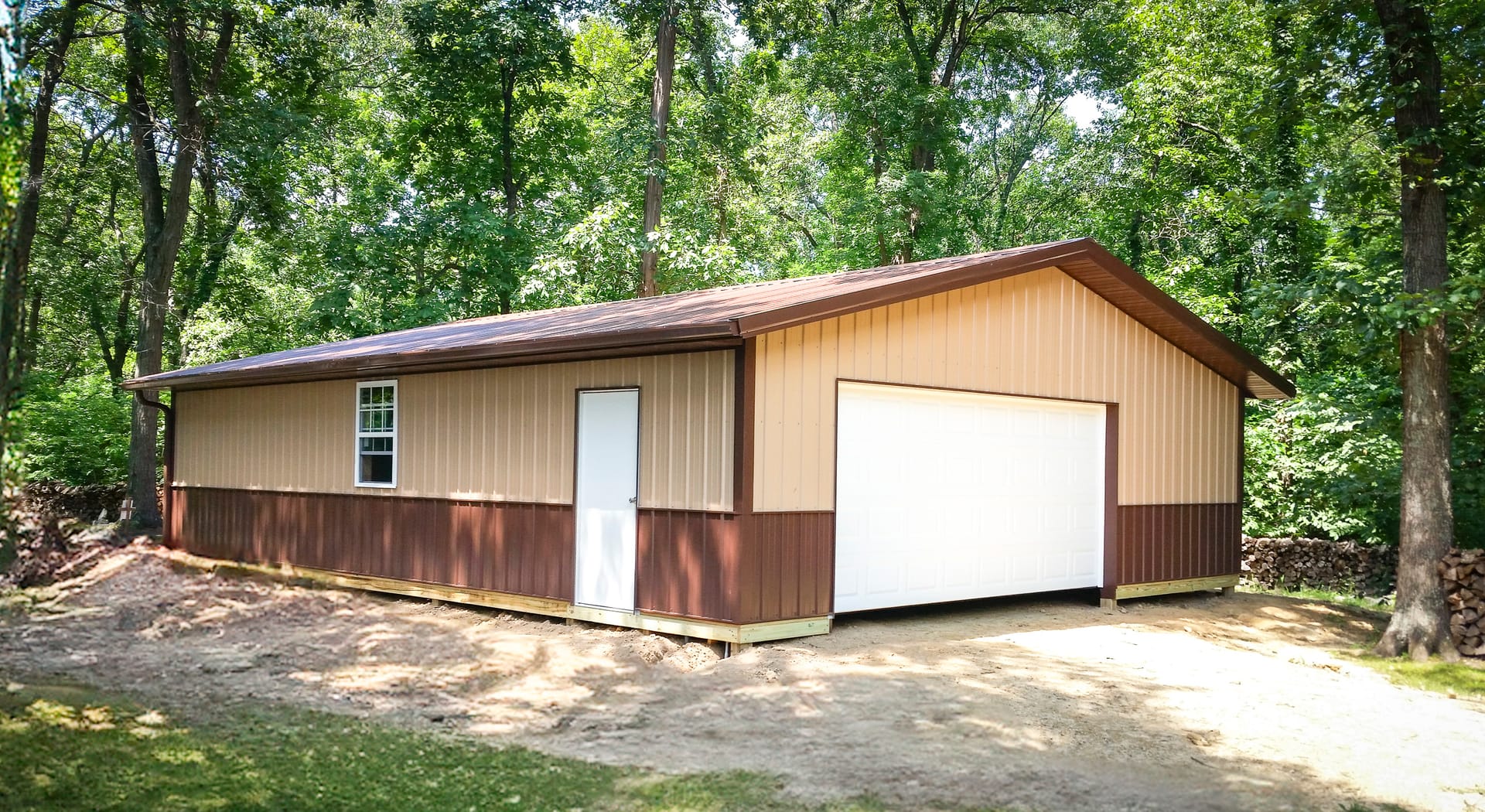
One garage owner described the building experience this way: “Guy was a pleasure to work with and the crew who came to build my garage. I love my new garage and can't wait to fill it up.” (A L., Google review)
Towns Served in Franklin County
Built-Mor Buildings serves property owners in West Frankfort, Benton, Christopher, Sesser, Zeigler, Royalton, West City, Valier, North City, Thompsonville, Buckner, Orient, Hanaford, Ewing, Freeman Spur, Mulkeytown and Macedonia.
Planning a Building in Franklin County
A useful building plan begins with what needs to fit inside and how it will move through the doors. Farm machinery needs turning and access room. Boats and campers need suitable door placement and dependable approach space. A warehouse or customer-facing building needs a layout that separates storage, work and public areas as needed.
The land matters just as much as the floor plan. In Franklin County, checking drainage patterns can help determine where the building sits, how the ground should be graded and where a gravel base belongs. Access from the road, parking space and future storage needs should be considered before the footprint is settled.
Built-Mor Buildings can shape a post-frame or metal building around those practical needs, whether the goal is protecting equipment near farm ground, storing recreational vehicles used around Rend Lake or creating functional space for a local business.
Post-Frame Construction in Southern Illinois
What soil conditions in Southern Illinois affect pole barn construction?▼
Southern Illinois has variable soil conditions ranging from clay-heavy bottomland near rivers to well-drained loess soils on uplands. Clay soils require deeper post embedment or concrete piers to prevent frost heave. BuiltMor evaluates your site and engineers the foundation appropriately — posts are typically set 4 to 6 feet deep depending on soil type and building size.
What snow load requirements apply to pole barns in Southern Illinois?▼
Southern Illinois is in a 20-25 pound per square foot ground snow load zone under Illinois building codes. BuiltMor engineers all structures to meet or exceed local snow load requirements. Roof pitch, truss spacing, and lumber grades are specified based on your county's requirements and the intended use of the building.
Do I need a permit for a pole barn in Southern Illinois?▼
Most Southern Illinois counties require building permits for pole barns and post-frame structures. Requirements vary by county — some have size thresholds, others require permits for any permanent structure. BuiltMor handles permit applications and inspections as part of your project. We know the requirements in each county we serve.
How do Southern Illinois weather conditions affect post-frame buildings?▼
Southern Illinois experiences hot, humid summers and cold winters with occasional ice storms. Post-frame buildings handle these conditions well when properly engineered. BuiltMor specifies pressure-treated posts rated for ground contact, appropriate ventilation for humidity control, and steel roofing and siding that withstand temperature swings and severe weather.
What areas does BuiltMor serve in Southern Illinois?▼
BuiltMor Buildings serves all of Southern Illinois, from the Metro East (St. Clair, Madison counties) south to Massac and Pulaski counties, and east to the Indiana border. We are a local contractor based in Southern Illinois — not a national kit company. We build complete structures on your site.