Jefferson County, IL | Post-Frame Construction & Metal Buildings
Building on Jefferson County Soil
Anyone pouring posts in Jefferson County is working with soil that holds water more than it lets it go. About 60.0 percent of the county's land is rated poorly or somewhat poorly drained, and the two soils that cover the largest share of the county, Bluford and Ava, tell the story. Bluford, the single largest soil type in the county, is somewhat poorly drained. Ava, the next largest, is only moderately well drained. Neither soil moves water away from a post quickly.
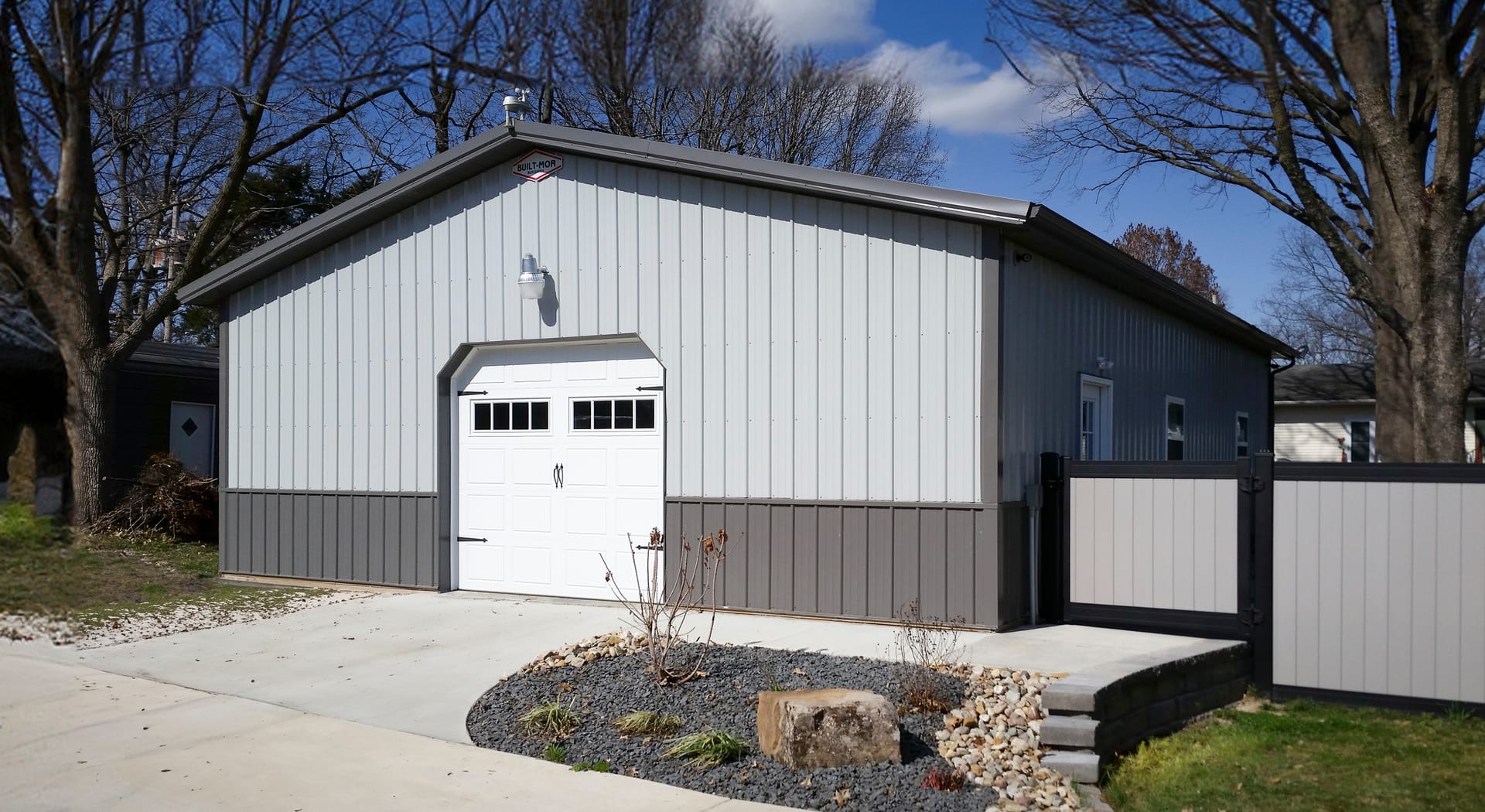
For a post-frame building, that means water sitting against embedded posts after a heavy rain is a real risk unless the site is graded to shed water away from the building footprint before construction starts. A gravel base under the slab or around post holes helps break capillary movement of water up into the wood, and proper backfill compaction around each post keeps standing water from pooling at the base. None of this is exotic, but skipping it on ground like Bluford or Ava is how a building ends up with soft spots, heaving, or a wet floor years down the road. Built-Mor Buildings plans post placement, drainage grading, and base material around the actual ground conditions on a Jefferson County lot rather than a generic layout, which matters more here than it would on naturally free-draining ground.
What People Build in Jefferson County
Jefferson County's economy shapes what gets built on its lots. Continental Tires the Americas and the Walgreens Distribution Center anchor a manufacturing and logistics base along the Interstate 57 and Interstate 64 corridor, and that combination of large-scale operations and highway access is why Office or Warehouse and Commercial Storage buildings are common requests, often used as overflow space, staging areas, or small operations tied to those larger employers. Continental Tires' presence also supports demand for Custom Metal Buildings for Automotive Businesses, sized for service, repair, or parts operations.
Jefferson County government employs people locally as well, and Municipal Buildings come up for that kind of use, from equipment storage to small administrative space. On the hospitality side, the county's hospitality industry and events like the Cedarhurst Craft Fair support Retail & Restaurant buildings and Wedding & Event Venue space, both suited to a post-frame shell that can be finished out for gatherings or a storefront.
Towns Served in Jefferson County
Built-Mor Buildings works with property owners throughout Jefferson County, including Mount Vernon, Ina, Bluford, Woodlawn, Dix, Waltonville, Bonnie, Belle Rive, Opdyke, and Nason.
Planning a Building in Jefferson County
Before a post goes in the ground anywhere in Jefferson County, the site should be assessed for how it drains, not assumed to drain the way the next lot over does. With 60.0 percent of the county's land somewhat poorly to poorly drained, and the two most common soils, Bluford and Ava, both slow to shed water, grading and base preparation deserve attention early in planning rather than as an afterthought once the slab is poured.
Built-Mor Buildings works through that groundwork with the property owner first: where water naturally moves across the lot, whether the building site needs to be raised or regraded, and how much gravel base the post holes and floor slab actually need given the ground they're going into. From there, the building itself, whether it's a warehouse near the highway corridor, a municipal storage building, an automotive shop, or an event venue, gets designed around that site rather than dropped onto it. For anyone planning a post-frame or metal building in Jefferson County, starting with what the ground is actually doing under the proposed footprint is the difference between a building that settles in cleanly and one that fights its site for years.
Post-Frame Construction in Southern Illinois
What soil conditions in Southern Illinois affect pole barn construction?▼
Southern Illinois has variable soil conditions ranging from clay-heavy bottomland near rivers to well-drained loess soils on uplands. Clay soils require deeper post embedment or concrete piers to prevent frost heave. BuiltMor evaluates your site and engineers the foundation appropriately — posts are typically set 4 to 6 feet deep depending on soil type and building size.
What snow load requirements apply to pole barns in Southern Illinois?▼
Southern Illinois is in a 20-25 pound per square foot ground snow load zone under Illinois building codes. BuiltMor engineers all structures to meet or exceed local snow load requirements. Roof pitch, truss spacing, and lumber grades are specified based on your county's requirements and the intended use of the building.
Do I need a permit for a pole barn in Southern Illinois?▼
Most Southern Illinois counties require building permits for pole barns and post-frame structures. Requirements vary by county — some have size thresholds, others require permits for any permanent structure. BuiltMor handles permit applications and inspections as part of your project. We know the requirements in each county we serve.
How do Southern Illinois weather conditions affect post-frame buildings?▼
Southern Illinois experiences hot, humid summers and cold winters with occasional ice storms. Post-frame buildings handle these conditions well when properly engineered. BuiltMor specifies pressure-treated posts rated for ground contact, appropriate ventilation for humidity control, and steel roofing and siding that withstand temperature swings and severe weather.
What areas does BuiltMor serve in Southern Illinois?▼
BuiltMor Buildings serves all of Southern Illinois, from the Metro East (St. Clair, Madison counties) south to Massac and Pulaski counties, and east to the Indiana border. We are a local contractor based in Southern Illinois — not a national kit company. We build complete structures on your site.