Richland County, Illinois | Post-Frame Construction & Metal Buildings
Around Richland County
Richland County has a mix of farm country, manufacturing, local shops, outdoor recreation, and community events. Olney, founded in 1841, is the county seat and is widely known as the Home of the White Squirrel. That local identity includes the annual White Squirrel Count, held on the first, second and third Saturdays of October.
Summer brings people together at Bower Park for Sounds of Summer concerts every Thursday. Visitors can also catch a summer evening performance by the Cummins Municipal Band or attend a production at the Olney Central College Theater. These regular gatherings help make practical, flexible event buildings a natural fit for the county.
Musgrove Park stays busy with baseball fields, basketball courts, soccer fields, a pickleball complex, a splash pad, a playground, and a skateboard park. The Musgrove Aquatic Center adds a water slide, water umbrella, diving well, and zero-depth entry. Property owners with recreational equipment may want a building that keeps gear together and provides room for maintenance or indoor activities.
Borah Lake, Vernor Lake, and East Fork Lake are all within minutes of downtown Olney. The lakes draw visitors for bass tournaments, sightseeing, and water sports. For owners who spend their weekends near the water, secure residential vehicle storage can keep towing vehicles and recreational gear under cover between trips.
Agriculture also has a distinctive local branch here. Richland County is home to two wineries featuring locally produced wines made from locally grown grapes. A post-frame winery, agricultural storage building, or insulated workspace can support the practical side of growing, processing, storing, and serving a local product.
The annual Richland County Fair at City Park brings the sights, sounds, and flavors of a traditional country fair together in one place. Agriculture is a major part of the local economy.
Building on Richland County Soil
Drainage deserves attention early on a Richland County building site. Across the county, 85.4 percent of the land is poorly or somewhat poorly drained. Cisne is the most common soil, and Bluford is also widespread. In plain terms, many properties can hold water longer after rain instead of shedding it quickly.
For a post-frame building, that makes placement and water movement important. The building should sit where runoff can move away rather than collect around the posts. Thoughtful grading can direct water around the structure, while a properly planned gravel base can provide a firmer, cleaner working surface and reduce mud around doors and traffic areas. Before finalizing the footprint, it helps to look at where water already travels across the property and where it tends to stand.
What People Build in Richland County
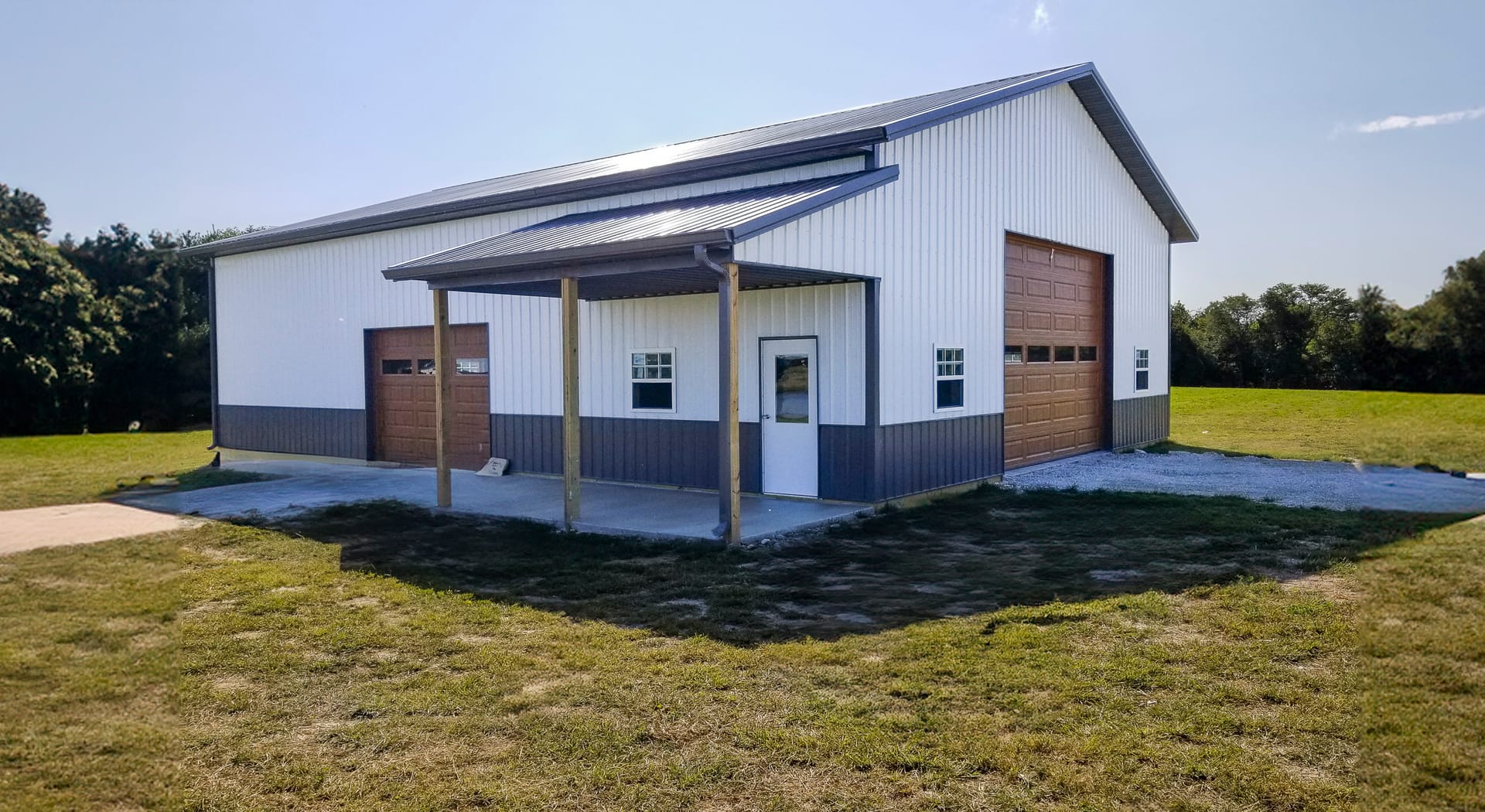
Built-Mor Buildings constructs post-frame and metal buildings for residential, agricultural, and commercial uses. The right type depends on what the property owner needs to store, protect, or operate.
Machine storage fits Richland County’s agricultural ground, giving tractors, implements, and other farm equipment a dedicated place out of the weather. A winery building also has a clear local connection because the county’s wineries use locally grown grapes to produce local wine.
Office or warehouse buildings can serve manufacturing and commercial operations, particularly for properties with access to U.S. Route 50, Illinois Route 130, or Illinois Route 250.
Recreational buildings can support the kind of active use seen at Musgrove Park and around the county’s lakes. Residential vehicle storage is another practical option for owners who need covered space for vehicles used to reach bass tournaments, sightseeing areas, or water-sports outings.
One customer described the experience this way: “Great workmanship. Great prices if you have any questions the secretary is very helpful as well.” (Yellow Pages reviewer, Yellow Pages review)
Towns Served in Richland County
Built-Mor Buildings serves property owners in Olney, Noble, Dundas, Parkersburg, Claremont, and Calhoun.
Planning a Building in Richland County
A useful plan starts with the property rather than a generic building package. Consider how vehicles will approach the site, how equipment will turn and enter, and whether the doors line up with the way the building will actually be used. A machine storage building has different traffic needs than a winery, retail building, warehouse, or residential storage building.
Water should be part of that conversation from the beginning. With poorly or somewhat poorly drained ground common across Richland County, the footprint should be evaluated for standing water, runoff, and the direction of the finished grade. Space for a gravel base and usable access around the building should be considered before construction begins, not after the site becomes muddy.
Location matters for business buildings as well. Access to U.S. Route 50, Illinois Route 130, and Illinois Route 250 may shape where customers, deliveries, employees, or equipment enter the property. Residential owners may care more about convenient access to a driveway, lake gear, or a towing vehicle.
Built-Mor Buildings fits the project by providing custom post-frame and metal building options shaped around the intended use. Whether the need comes from agriculture, manufacturing, retail, local wine production, or weekends on the water, the goal is a building positioned for the property and arranged for the work or storage it needs to handle.
Post-Frame Construction in Southern Illinois
What soil conditions in Southern Illinois affect pole barn construction?▼
Southern Illinois has variable soil conditions ranging from clay-heavy bottomland near rivers to well-drained loess soils on uplands. Clay soils require deeper post embedment or concrete piers to prevent frost heave. BuiltMor evaluates your site and engineers the foundation appropriately — posts are typically set 4 to 6 feet deep depending on soil type and building size.
What snow load requirements apply to pole barns in Southern Illinois?▼
Southern Illinois is in a 20-25 pound per square foot ground snow load zone under Illinois building codes. BuiltMor engineers all structures to meet or exceed local snow load requirements. Roof pitch, truss spacing, and lumber grades are specified based on your county's requirements and the intended use of the building.
Do I need a permit for a pole barn in Southern Illinois?▼
Most Southern Illinois counties require building permits for pole barns and post-frame structures. Requirements vary by county — some have size thresholds, others require permits for any permanent structure. BuiltMor handles permit applications and inspections as part of your project. We know the requirements in each county we serve.
How do Southern Illinois weather conditions affect post-frame buildings?▼
Southern Illinois experiences hot, humid summers and cold winters with occasional ice storms. Post-frame buildings handle these conditions well when properly engineered. BuiltMor specifies pressure-treated posts rated for ground contact, appropriate ventilation for humidity control, and steel roofing and siding that withstand temperature swings and severe weather.
What areas does BuiltMor serve in Southern Illinois?▼
BuiltMor Buildings serves all of Southern Illinois, from the Metro East (St. Clair, Madison counties) south to Massac and Pulaski counties, and east to the Indiana border. We are a local contractor based in Southern Illinois — not a national kit company. We build complete structures on your site.