Randolph County, Illinois | Post-Frame Construction & Metal Buildings
Around Randolph County
Randolph County has a mix of river commerce, outdoor recreation, deep Illinois history, and traditions that draw people from well beyond the county line.
Kaskaskia holds a special place in that story as Illinois’ first capital. Visitors to Kaskaskia Island can also see the restored Liberty Bell of the West Shrine. Near Prairie du Rocher, Fort de Chartres hosts the Rendezvous, while the southern beginning of the Kaskaskia Trail and other French historical sites offer more of the county’s early history.
Chester’s connection to Popeye is just as distinctive. Popeye was created in 1929, and today the Popeye Character Trail runs through Chester. Elzie C.
For a wider view, the observation deck at the Randolph County Courthouse overlooks the Mississippi River Valley. It is described locally as one of the ten best views in America and gives visitors a strong sense of how closely the county is tied to the river.
That river connection is practical, too. The Kaskaskia and Mississippi rivers meet in Randolph County, and their confluence supports three commercial port districts. The Kaskaskia River is also a destination for bowfishing, while the Confluence Heritage Area provides a quiet place to watch birds and river wildlife.
Outdoor recreation extends across the county. Baldwin Lake is known for trophy fishing, and the area draws people interested in camping, hunting, birding, and fishing. In April, visitors search the region for prized morel mushrooms.
Sparta brings another major draw through the World Shooting and Recreation Complex. The complex hosts the Grand American Trapshooting event, and visitors come to the county for a day, a weekend, or a summer vacation. Car shows attract thousands to Randolph County annually.
Building on Randolph County Soil
Drainage deserves attention before deciding exactly where a post-frame building will sit. Across Randolph County, 51.2 percent of the land is poorly or somewhat poorly drained. Bunkum is one of the county’s most common soils and is somewhat poorly drained, while Menfro is another common soil and is well drained.
For a property owner, that means one part of a parcel may shed water better than another. Water should not be allowed to collect around posts or remain beneath the building. Thoughtful placement, grading that moves runoff away, and a properly prepared gravel base can help keep the building area usable and reduce persistent wet conditions. Built-Mor Buildings can discuss the planned use and building location with the owner so the structure fits the site rather than being placed in a low, inconvenient spot.
What People Build in Randolph County
Agriculture remains visible throughout this rural county, from working farmers to the infrastructure that connects local businesses with the rest of the nation. Machine storage gives tractors, implements, and other farm equipment a dedicated place out of the weather. Livestock buildings can provide purpose-built space for animal operations.
Commercial construction also has a clear place here. Gilster-Mary Lee, Corp., a private label food company, is one of the county’s large employers, and food processing is part of the local economy. Office or warehouse buildings can support businesses that need room for inventory, equipment, work areas, or distribution activity.
The network of Illinois Route 3, Illinois Route 4, Illinois Route 13, Illinois Route 150, Illinois Route 153, Illinois Route 154, Illinois Route 155, and Illinois Route 159 connects communities and commercial properties across the county. A well-planned office or warehouse building can combine enclosed work space with storage in one straightforward structure.
Recreational buildings also fit the way people use Randolph County. Randolph County offers the World Shooting and Recreation Complex, trophy fishing at Baldwin Lake, river fishing, hunting, camping, and annual events. Residential vehicle storage can keep trucks, trailers, boats, or other recreational vehicles together at home.
For landowners who want living space and storage under one roof, Built-Mor Barndominiums offer another option. The layout can be considered around the owner’s daily needs, whether the priority is residential space, a hobby area, or room for vehicles and equipment.
A customer described a recurring interaction simply: “Great people. I'm a truck driver go here often. And always nice” (Steven S., Google review).
Towns Served in Randolph County
Built-Mor Buildings serves property owners in Chester, Sparta, Red Bud, Steeleville, Percy, Coulterville, Tilden, Evansville, Prairie du Rocher, Ellis Grove, Baldwin, Ruma, Rockwood, and Kaskaskia.
Planning a Building in Randolph County
A useful first conversation starts with what the building needs to do. A farm machine building has different priorities from residential vehicle storage, a recreational building, an office or warehouse, or a barndominium. Equipment dimensions, everyday traffic, storage needs, work areas, and future use all affect the right footprint and layout.
The property matters just as much as the building type. Owners should consider where vehicles will enter, how trailers or farm equipment will turn, and whether the proposed location stays convenient during wet weather. Space around the structure also matters for regular access and long-term use.
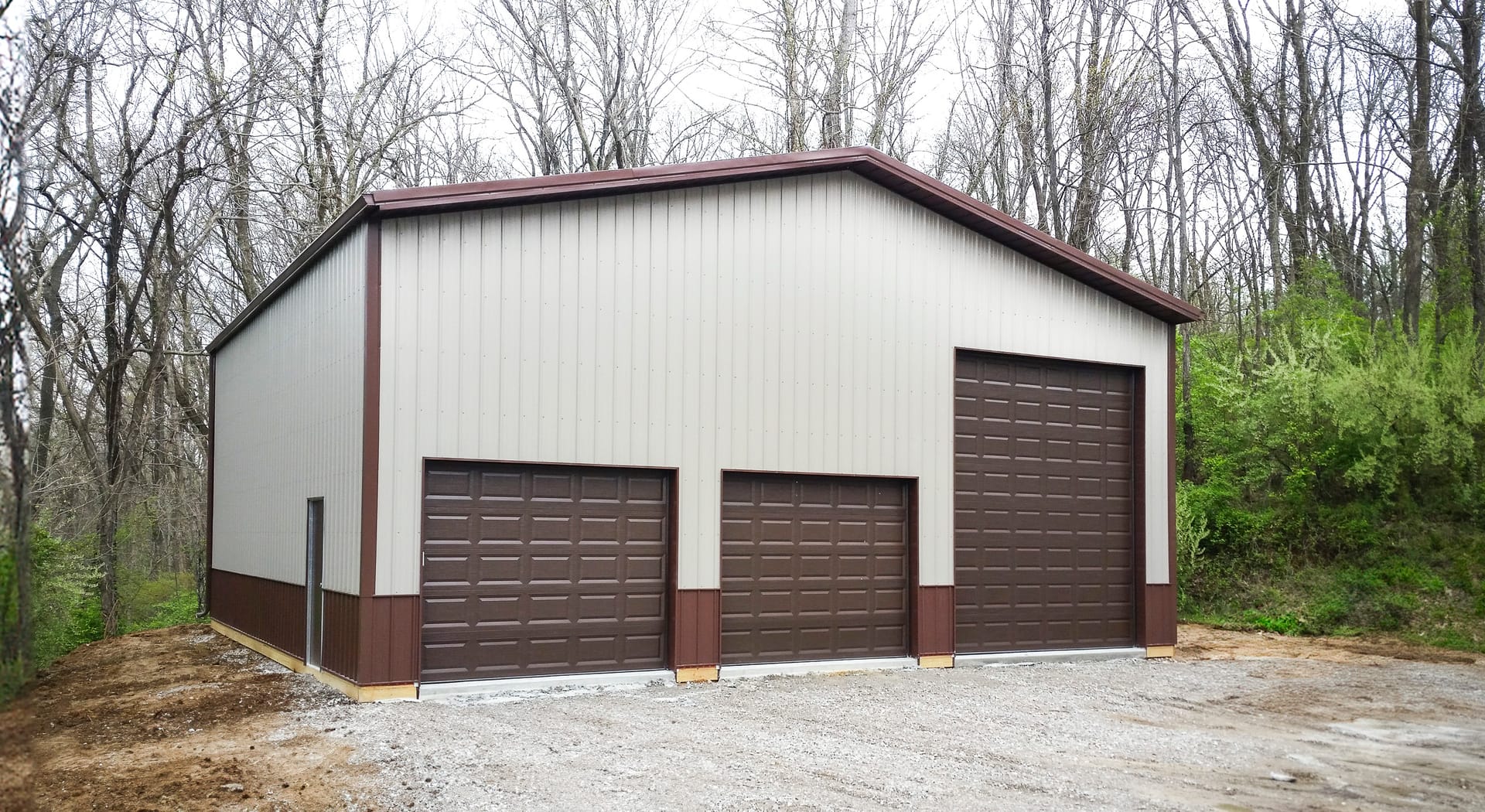
Built-Mor Buildings constructs post-frame and metal buildings for agricultural, commercial, and residential properties. In Randolph County, that approach can serve a farmer needing machine space, a business along a state route, an outdoor enthusiast storing recreational equipment, or a landowner planning a combined home and storage building. The goal is a building selected for the property, the intended use, and the way the owner expects to use it every day.
Post-Frame Construction in Southern Illinois
What soil conditions in Southern Illinois affect pole barn construction?▼
Southern Illinois has variable soil conditions ranging from clay-heavy bottomland near rivers to well-drained loess soils on uplands. Clay soils require deeper post embedment or concrete piers to prevent frost heave. BuiltMor evaluates your site and engineers the foundation appropriately — posts are typically set 4 to 6 feet deep depending on soil type and building size.
What snow load requirements apply to pole barns in Southern Illinois?▼
Southern Illinois is in a 20-25 pound per square foot ground snow load zone under Illinois building codes. BuiltMor engineers all structures to meet or exceed local snow load requirements. Roof pitch, truss spacing, and lumber grades are specified based on your county's requirements and the intended use of the building.
Do I need a permit for a pole barn in Southern Illinois?▼
Most Southern Illinois counties require building permits for pole barns and post-frame structures. Requirements vary by county — some have size thresholds, others require permits for any permanent structure. BuiltMor handles permit applications and inspections as part of your project. We know the requirements in each county we serve.
How do Southern Illinois weather conditions affect post-frame buildings?▼
Southern Illinois experiences hot, humid summers and cold winters with occasional ice storms. Post-frame buildings handle these conditions well when properly engineered. BuiltMor specifies pressure-treated posts rated for ground contact, appropriate ventilation for humidity control, and steel roofing and siding that withstand temperature swings and severe weather.
What areas does BuiltMor serve in Southern Illinois?▼
BuiltMor Buildings serves all of Southern Illinois, from the Metro East (St. Clair, Madison counties) south to Massac and Pulaski counties, and east to the Indiana border. We are a local contractor based in Southern Illinois — not a national kit company. We build complete structures on your site.