Union County, Illinois | Post-Frame Construction & Metal Buildings
Around Union County
Union County has a mix of farm country, wildlife habitat, local food and deep history that shapes what property owners need from a building.
Jonesboro, the county seat, was established in 1800 and incorporated in 1818. It also hosted the third Lincoln-Douglas debate on September 15, 1858, an event that brought national attention to the community.
In Cobden, the free Union County Museum covers the area from several angles. Its displays include Native American artifacts, farming and railroad history, barrel making, vintage tools, the Civil War and Kirkpatrick Pottery of Anna. It is open Saturday and Sunday from 1 to 5 p.m.
Agriculture here is not limited to row crops. Flamm Orchards in Cobden draws travelers for fresh peaches and apples, along with homemade peach cobbler topped with ice cream. Hedman Vineyards & Winery grew from a peach farm into a winery and the Peach Barn Café. Alto Vineyards produces wine in Alto Pass, while the Shawnee Hills Wine Trail runs through the county and gives visitors an easy way to find Illinois-made wines.
The Union County Fair is another fixture on the local calendar. The 145th Annual Union County Fair begins August 21, 2026, at Anna City Park. A gathering like that highlights the need for practical agricultural storage as well as flexible places for vendors, meals and events.
Outdoor space is just as much a part of the county. The Union County State Fish & Wildlife Area encompasses 6,202 acres in the Lower Mississippi River bottomlands division of Illinois. During fall and winter, thousands of Canada geese gather along Refuge Drive, with the Union County segment varying from 50,000 to 100,000 each winter.
Trail of Tears State Forest adds just over 5,000 acres in western Union County. Grassy Lake covers 350 acres, and Lyerla Lake covers 275 acres. Shawnee National Forest offers woodlands along with boating or swimming at its beach areas. Those destinations make secure storage useful for outdoor and recreational equipment.
Building on Union County Soil
A good post-frame building starts with choosing the right part of the property. Across Union County, 19.3 percent of the land is poorly drained. That does not mean every site has a water problem, but it does mean standing water and slow drainage deserve attention before posts are set.
Menfro and Hosmer are the two most common soils in the county. Menfro is well drained, while Hosmer is moderately well drained. Even on those soils, the exact building spot matters. Built-Mor Buildings can account for how water moves around the planned structure, whether the grade directs runoff away from posts and doors, and where a gravel base would help keep the approach firm. On wetter ground, moving the building to a better-drained portion of the parcel may be more useful than trying to force a low area to work.
What People Build in Union County
The right building here often connects directly to how the land or business is used.
Machine Storage fits a county where orchards, peach farms and farming history remain visible. A post-frame structure can create one covered place for tractors, implements and other working equipment instead of leaving them scattered around a property.
Winery buildings and Retail & Restaurant buildings also have a clear local connection. The Shawnee Hills Wine Trail, Alto Vineyards, Hedman Vineyards & Winery and the Peach Barn Café show how growing, production, food service and visitors can meet on the same property. Built-Mor Buildings offers structures suited to those uses without treating every operation as if it needs the same layout.
Commercial Storage can serve properties with access to Interstate 57, U.S. Highway 51, Illinois Route 3, Illinois Route 127 or Illinois Route 146. For an owner receiving supplies or storing business inventory, the position of large doors and the room available for vehicles to approach can be considered early in the plan.
Recreational Buildings make sense near a county’s lakes, forests and wildlife areas. They can provide protected space for boats, outdoor gear and equipment used around Grassy Lake, Lyerla Lake or Shawnee National Forest.
Wedding & Event Venue buildings can support gatherings in a county already drawing people for the Union County Fair, wineries, orchards and seasonal outdoor attractions. A multi-use interior can be planned around the property’s actual purpose, whether that is a private gathering place or a visitor-oriented business.
One customer put the interaction simply: “Great people. I'm a truck driver go here often. And always nice” (Steven S., Google review).
Towns Served in Union County
Built-Mor Buildings serves property owners in Anna, Jonesboro, Cobden, Dongola, Alto Pass and Mill Creek.
Planning a Building in Union County
Planning should begin with what needs to happen inside the building and how the site works outside it. A farm machine shed needs clear equipment access. A winery or restaurant needs a layout that reflects production, service and visitor areas. Recreational storage needs doors and interior space suited to the equipment being protected.
The building location matters just as much as its footprint. Property owners should look at where water collects, how vehicles enter, whether the ground can be graded to drain away from the structure and where a gravel base will keep regular traffic from turning the approach soft. These choices are especially important on the poorly drained portions of Union County.
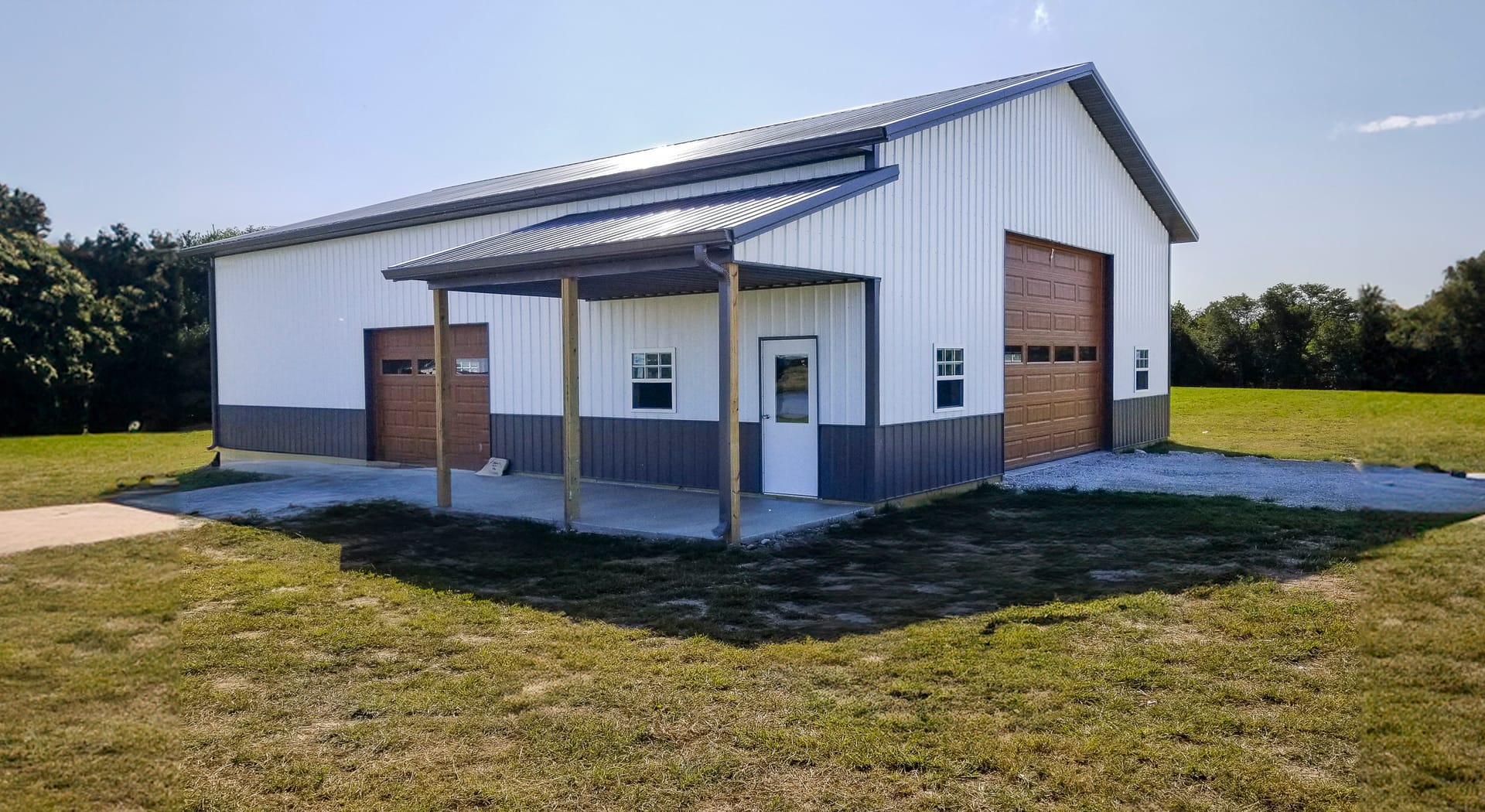
Built-Mor Buildings constructs post-frame and metal buildings for agricultural, commercial and residential properties. For a Union County project, the goal is a building shaped around the parcel, the equipment or activity it will hold, and the way the owner expects to use it day after day.
Post-Frame Construction in Southern Illinois
What soil conditions in Southern Illinois affect pole barn construction?▼
Southern Illinois has variable soil conditions ranging from clay-heavy bottomland near rivers to well-drained loess soils on uplands. Clay soils require deeper post embedment or concrete piers to prevent frost heave. Built-Mor evaluates your site and engineers the foundation appropriately — posts are typically set 4 to 6 feet deep depending on soil type and building size.
What snow load requirements apply to pole barns in Southern Illinois?▼
Southern Illinois is in a 20-25 pound per square foot ground snow load zone under Illinois building codes. Built-Mor engineers all structures to meet or exceed local snow load requirements. Roof pitch, truss spacing, and lumber grades are specified based on your county's requirements and the intended use of the building.
Do I need a permit for a pole barn in Southern Illinois?▼
Most Southern Illinois counties require building permits for pole barns and post-frame structures. Requirements vary by county — some have size thresholds, others require permits for any permanent structure. The owner obtains the building permit, and Built-Mor provides the plans to take to the city or county. We know the requirements in each county we serve.
How do Southern Illinois weather conditions affect post-frame buildings?▼
Southern Illinois experiences hot, humid summers and cold winters with occasional ice storms. Post-frame buildings handle these conditions well when properly engineered. Built-Mor specifies pressure-treated posts rated for ground contact, appropriate ventilation for humidity control, and steel roofing and siding that withstand temperature swings and severe weather.
What areas does Built-Mor serve in Southern Illinois?▼
Built-Mor Buildings serves all of Southern Illinois, from the Metro East (St. Clair, Madison counties) south to Massac and Pulaski counties, and east to the Indiana border. We are a local contractor based in Southern Illinois — not a national kit company. We build complete structures on your site.